Alignment is one of the few maintenance jobs that pays for itself. A car pulling to one side or wearing the inside edge of a tyre is telling you the wheels are pointing in slightly different directions from the road, and tyres are expensive.
This guide explains what alignment actually measures, which symptoms point to it, what a proper four-wheel check involves and what it should cost before you agree.
Key facts
- Alignment covers three angles: camber, caster and toe.
- A steering wheel that sits off-centre is one of the clearest signs.
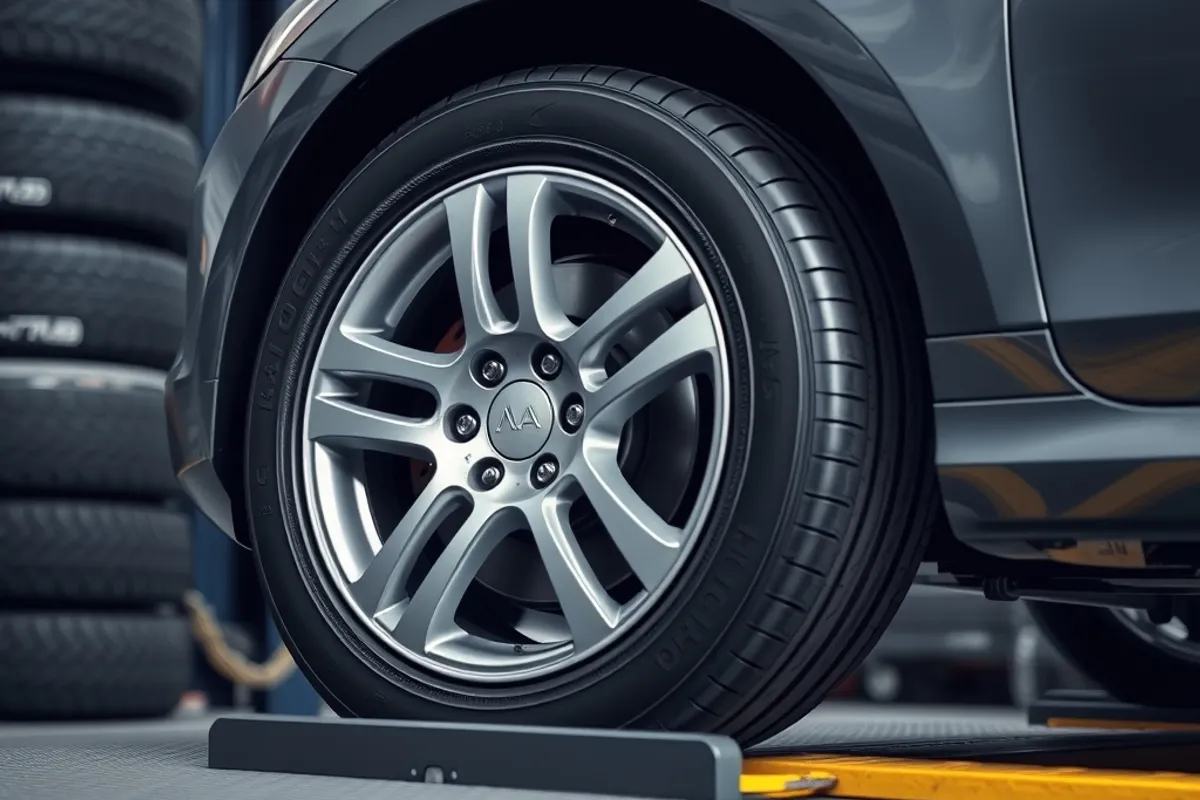
- Inner or outer edge wear on a tyre usually points to a toe or camber problem.
- Four-wheel alignment is the correct job on any car with independent rear suspension.
Contents
- What wheel alignment actually measures
- Symptoms you can feel
- What causes alignment to drift
- Two-wheel vs four-wheel alignment
- What happens in an alignment bay
- Cost and frequency
- Alignment after repairs
What wheel alignment actually measures
Camber is the lean of the wheel when viewed from the front. Too much negative camber wears the inner edge; too much positive wears the outer. Caster is the steering axis tilt, which affects straight-line stability and how strongly the wheel self-centres.
Toe is whether the wheels point inwards or outwards relative to each other. It is the angle most responsible for rapid, even-looking but uneven tyre wear, and it is the one most easily knocked out by a kerb.
Symptoms you can feel
The classic set: the car drifts to one side on a flat straight road, the steering wheel is off-centre when driving straight, and the car feels vague or nervous at motorway speed. Uneven tyre wear confirms it.
Rule out tyre pressure, mismatched tyres and worn suspension first. Alignment is measured against the car, so a worn bush or bent arm makes a perfect alignment reading meaningless.

What causes alignment to drift
Kerb strikes, potholes and speed humps take the blame for most sudden changes. A hard knock can bend a tie rod or a control arm, in which case alignment alone will not fix it.
Worn suspension components cause slow drift. If you need alignment twice in a year with no impacts, ask the workshop to check ball joints, bushes and top mounts before charging you again.
Two-wheel vs four-wheel alignment
Two-wheel alignment adjusts only the front. That is adequate on some older cars with a fixed rear axle, but it leaves rear toe unmeasured. On anything with independent rear suspension, a four-wheel check is the correct job.
Ask which wheels are adjustable on your car before booking. Some rear suspensions have no adjustment from the factory, and a good workshop will say so rather than charging for a measurement it cannot correct.
A pull to the left is not always alignment. Swap the front tyres first and see whether the pull follows them.
What happens in an alignment bay
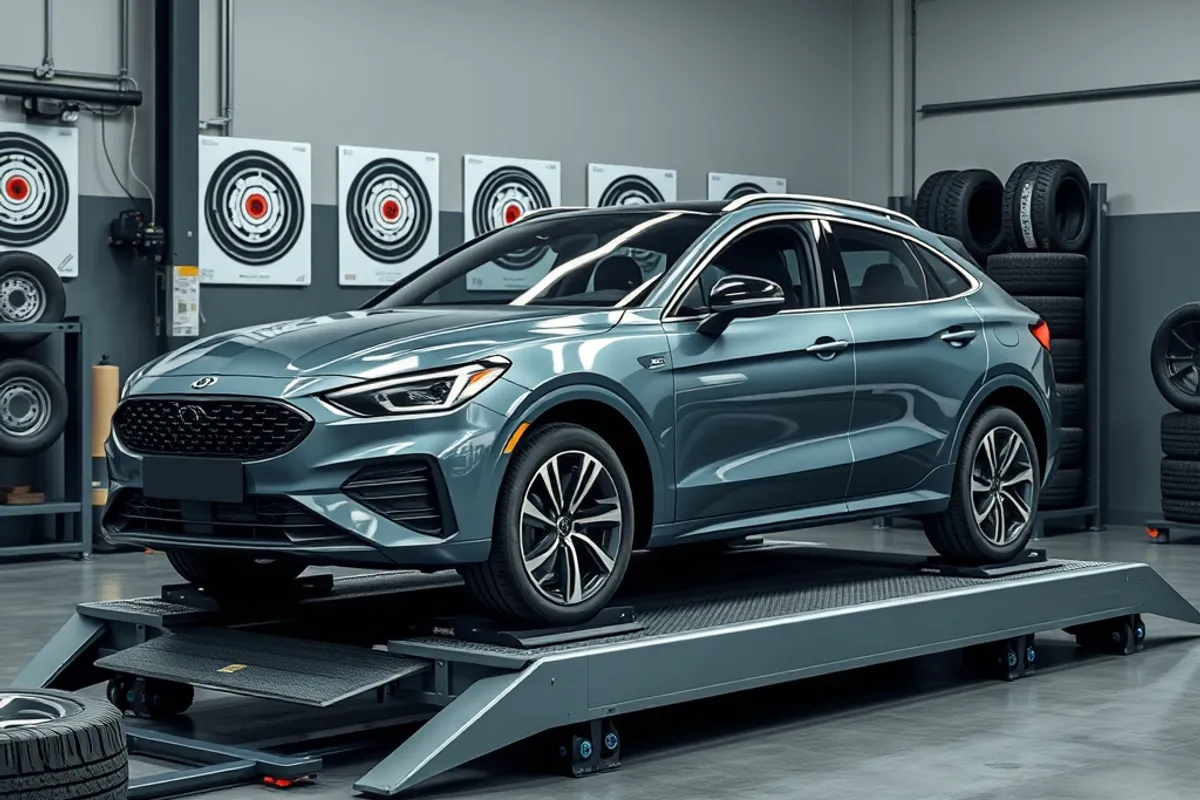
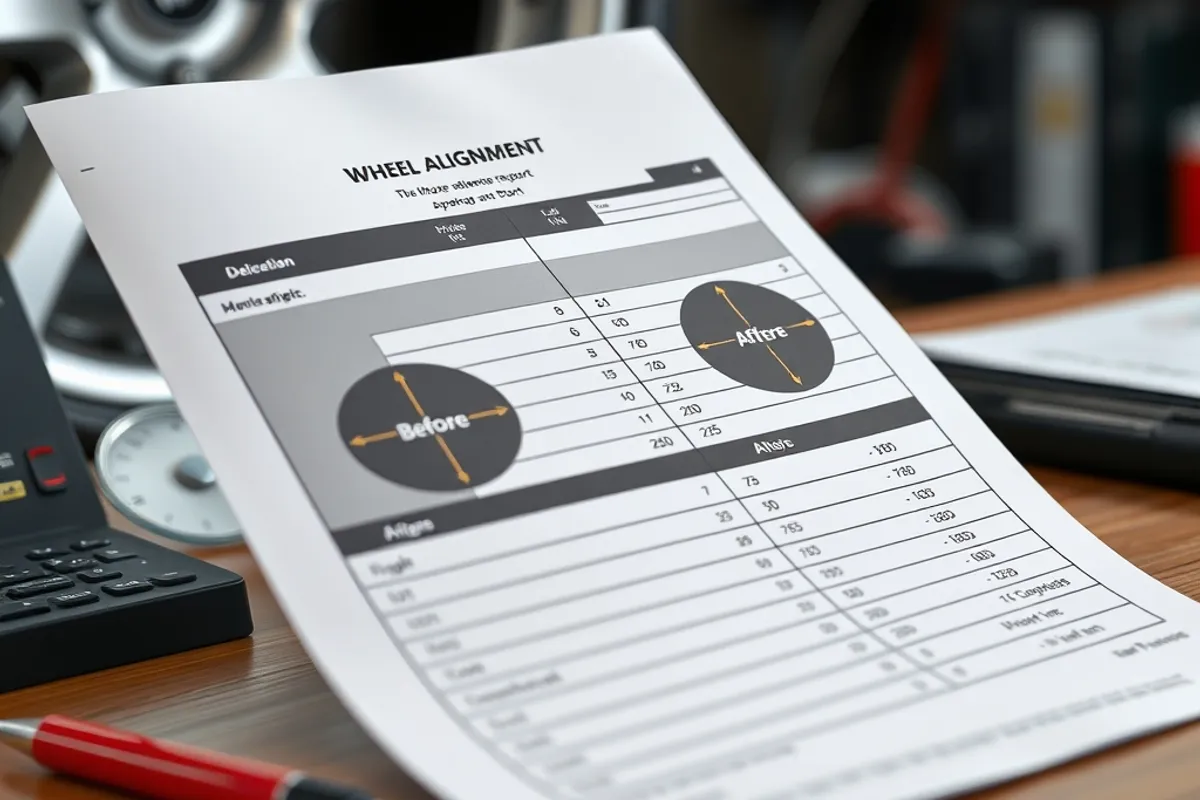
The car goes on a level ramp, targets or sensors are fitted, and the system produces a before-and-after report. A proper job includes a road test and a check that the steering wheel is centred.
Ask for the printout. It should show the manufacturer's target range and your final figures, not just a green tick. Without numbers you cannot tell a careful adjustment from a quick tweak.
Cost and frequency
A four-wheel alignment is typically a modest one-off charge, far less than a single tyre. Prices rise where adjustment requires extra labour, such as shimming a rear axle or freeing a seized tie rod.
Check alignment annually, after any kerb strike, and whenever new tyres are fitted. It is also worth doing after suspension work, since replacing a worn arm changes the geometry.
Alignment after repairs
Any job that disturbs the steering or suspension should end with an alignment check: track rod ends, wishbones, struts, subframe work. Skipping it is how a car leaves a workshop tracking badly.
If a car still pulls after alignment, look for a tyre conicity problem or a bent component. Our alignment versus balancing guide explains how to separate geometry faults from wheel balance.